Growth should not come at the expense of control, consistency or resilience.
E-Squared helps organisations identify and address the operational constraints that limit performance, enabling sustainable growth and improved operational effectiveness.
We do this via short, hands-on delivery projects – typically 4-6 weeks – which address one or more of the following operational challenges.
Scaling without losing control
Growth often introduces complexity faster than organisations can absorb it. We help businesses strengthen the operational capabilities required to support expansion while maintaining visibility, accountability and customer experience.
Typical outcomes:
- Greater operational visibility
- Improved management control
- Consistent execution
- Increased capacity for growth
Reducing dependency on key individuals
Many organisations rely heavily on the knowledge and experience of a small number of people. We help identify critical dependencies and create more repeatable, transferable ways of working.
Typical outcomes:
- Reduced operational risk
- Improved knowledge transfer
- Better continuity
- Stronger organisational resilience
Improving process visibility
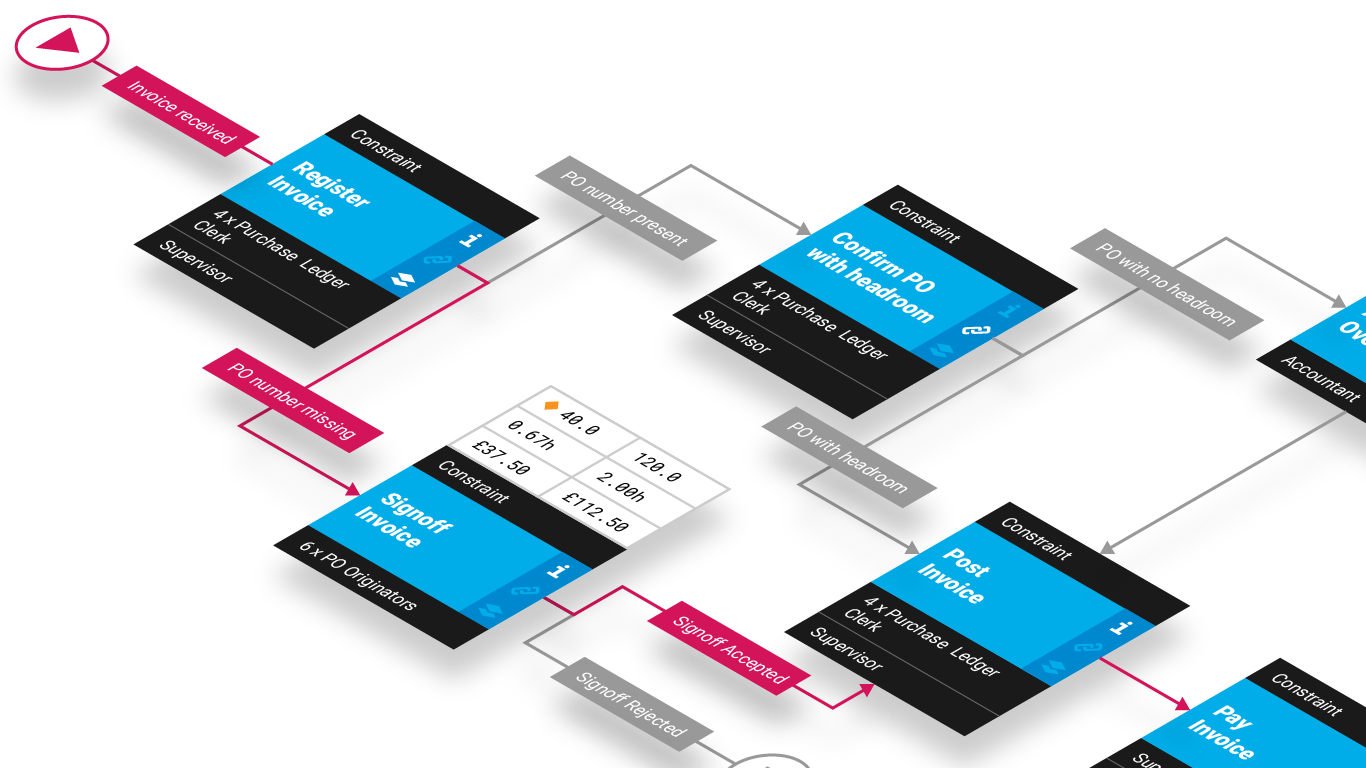
Sustainable improvement starts with understanding how work is actually performed. We help organisations gain clarity over their operational processes, exposing inefficiencies, bottlenecks and opportunities for improvement.
Typical outcomes:
- Clearer operational insight
- Better decision-making
- Identification of improvement opportunities
- Greater alignment across teams
Building operational resilience
Resilient organisations are better able to adapt to growth, change and disruption. We help strengthen the structures, governance and operating disciplines that support long-term performance.
Typical outcomes:
- Stronger operational foundations
- Reduced dependency and risk
- Improved consistency
- Increased adaptability
Why traditional approaches fail
Most growing businesses recognise the symptoms of operational complexity: inconsistent performance, increasing dependence on key individuals, reduced visibility, and growing operational risk. The problem is that many of the solutions commonly used to address these issues only tackle part of the challenge.

-
ERP systems digitise processes but do not define how work should be performed.
-
Process mapping exercises document activities but often fail to embed them into daily operations.
-
Consultancy reports identify issues and make recommendations, but implementation is frequently left to internal teams.
-
Continuous improvement programmes optimise individual processes without creating a coherent operational framework.
-
Additional management layers can provide short-term control but often increase cost and complexity.
Why AI doesn’t solve this problem either
Artificial intelligence can improve productivity, automate tasks and provide valuable insights. However, AI cannot create the operational foundations that growing businesses need.
-
AI cannot define ownership and accountability.
-
AI cannot establish governance and controls.
-
AI cannot standardise inconsistent ways of working.
-
AI cannot provide a clear operating model where one does not already exist.
-
AI often accelerates existing inefficiencies rather than eliminating them.

What actually works?